
Dental Bridges Beaverton
Bridge the Gap and Beautify Your Smile

At Caring Smiles Dental in Beaverton, Dr. Appelhans and our team understand how missing teeth can affect your oral health and quality of life. That is why we offer multiple tooth replacement solutions, including dental bridges. In just a few appointments, we may be able to bridge the gap between your teeth, beautify your smile, and improve your oral function. Continue reading below to learn more about bridges, or contact us directly to ask questions or set up a consultation. We look forward to speaking with you!
Why Choose Caring Smiles Dental for Dental Bridges?
- Traditional & Implant Bridges Available
- Lifelike Restorations that Blend in With Your Natural Teeth
- Easy & Precise Digital Dental Impressions
What Is a Dental Bridge?
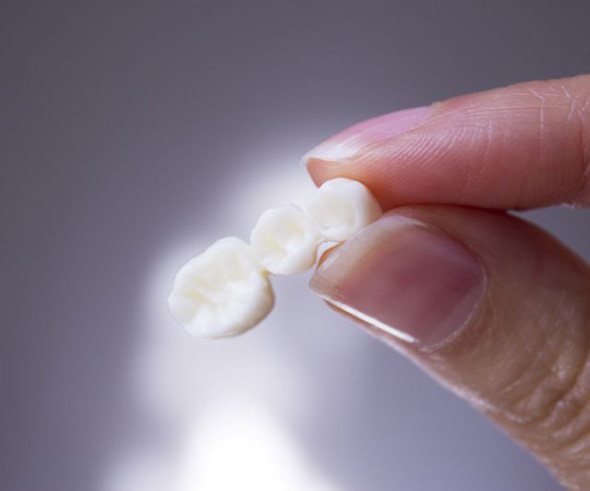
A dental bridge is a multi-unit prosthetic that is designed to replace one or more missing teeth in a row. They usually have a crown on each end, which support one or more pontics (artificial teeth) between them. Bridges can be made of various materials, but those made of lifelike options are the most popular. For example, porcelain and ceramic materials are almost indistinguishable from natural teeth. Bridges are very sturdy and have the potential to last for a decade or longer.
Types of Dental Bridges

There are a few different types of dental bridges. When you visit us for your consultation, we will examine your mouth and learn about your preferences before we recommend a specific type of prosthetic. Depending on your situation, we might suggest that you get either a traditional fixed bridge or an implant bridge. Here is an overview of each option:
Traditional Dental Bridges
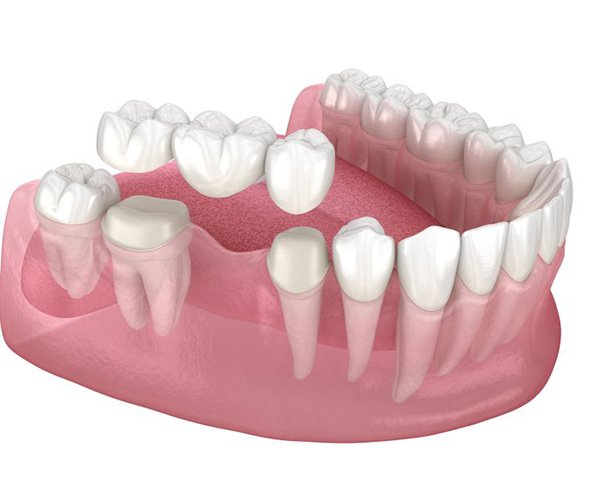
A traditional bridge, also known as a fixed bridge, is attached to the teeth that surround an empty space in the mouth (called the abutment teeth). The treatment process requires just a few appointments, and this type of bridge tends to be affordable compared to implant-supported tooth replacement. However, it does require that the abutment teeth undergo some significant modification.
Implant Bridges
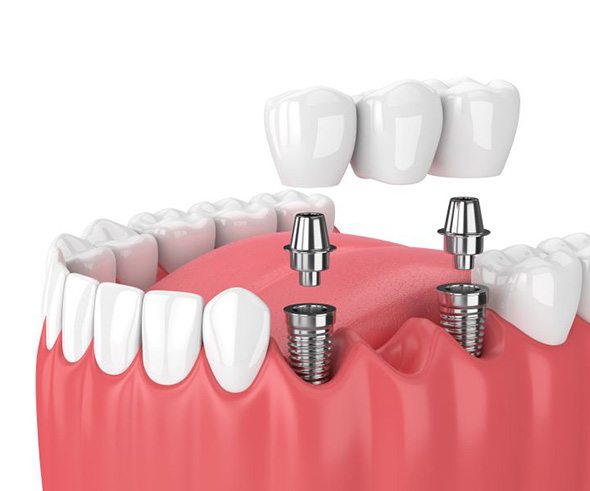
An implant bridge does not rely on the natural teeth for support. Rather, its crowns get attached to prosthetic tooth roots (dental implants), which are surgically inserted into the jawbone. An implant bridge is remarkably sturdy, supports jawbone health, and does not usually require the modification of any natural teeth.
The Benefits of Getting a Dental Bridge

Dental bridges offer some pretty remarkable benefits:
- Restores your smile: Dental bridges fill gaps left by missing teeth, giving you a complete and natural-looking smile.
- Improves chewing ability: Replacing missing teeth helps you chew food more comfortably and efficiently. This can make eating a wider variety of foods easier and more enjoyable. It can also reduce wear and tear on your natural teeth.
- Prevents teeth from shifting: Filling the gap keeps your remaining teeth from moving out of position. This helps maintain proper bite alignment and might even prevent future tooth loss.
- Offers durability and long-lasting results: With proper care, dental bridges can last for many years.
- Provides a natural appearance: Bridges made from porcelain or ceramic look very similar to real teeth.
Dental Bridges FAQs
Can You Take a Dental Bridge Out?
No, you cannot take a dental bridge out on your own. They are designed to remain in your mouth for many years after placement. Only your dentist can remove a dental bridge.
Some healthcare professionals refer to partial dentures as “removable bridges,” however, this is not entirely accurate. Partials are similar to bridges, but one of their key differences is that partials can be removed by the patient at any time and dental bridges can’t.
Is a Partial Denture the Same as a Bridge?
No, although they are sometimes referred to as “removable bridges,” partial dentures are not the same as a traditional fixed dental bridge. Dental bridges are designed to stay in place for many years and can only be removed by a dentist, but a patient can take out their partial denture any time they’d like to.
The other main difference between the two is that bridges can only replace up to four missing teeth if they’re consecutive, whereas partial dentures can restore several teeth at various places along the arch.
Bridges are anchored in place via two dental crowns that are fitted over two of your healthy remaining teeth. Conversely, partials typically attach via metal clips or clasps that go behind your natural teeth.
At your consultation, Dr. Applehans will explain all your options with you and help you decide which tooth replacement option will be best for your individual smile.
How Many Teeth Can a Dental Bridge Replace?
Depending on your individual needs, a dental bridge can replace between one and four missing teeth in a row. However, in most cases they are used to replace just one or two teeth. That’s because the longer your bridge extends, the less stable it can become, especially if your natural teeth supporting the bridge aren’t strong and healthy. Thus, it may become too risky to have a bridge replace three or more teeth.
Implant bridges can lower this risk, as they are secured in place by dental implants and just as strong as your natural teeth, if not more.
Can Dental Bridges Be Whitened?
No, no matter what material your dental bridge is crafted from, it cannot be whitened like your real teeth can. That’s because tooth enamel is covered with tiny pores through which bleaching gels can enter to break apart stains. Restorations like dental bridges do not have these pores, and thus your bridge should always remain the same color.
Metal-free bridges were designed to blend in seamlessly with your remaining teeth. To lower the risk of your natural teeth becoming discolored and making your dental bridge stand out in your smile, speak to Dr. Applehans about getting professional whitening prior to having your bridge placed. This way, your bridge can be matched to your ideal shade of white.